Nurul Afsar is a seasoned SEO expert with a decade of experience under his belt. He has a deep understanding of search engine algorithms and a proven track record of delivering outstanding results for his clients. Afsar specializes in technical SEO, on-page and off-page optimization techniques, including keyword research, link building, and content creation. He has experience working with a wide range of industries and is well-versed in the latest SEO trends and best practices. He is passionate about helping businesses succeed online and is dedicated to delivering measurable results for his clients.
As we progress through 2025, the social media landscape is continuing to evolve, bringing new trends and consumer behaviors to light. The rise of ephemeral content and a growing focus on authenticity and social responsibility are key factors that businesses need to consider in order to effectively engage their audiences. This blog post will explore the major social media trends shaping 2025, offering insights on how to leverage these developments for successful marketing campaigns. For more information on how we can help you navigate these trends, visit Trek.ca.
The Rise of Ephemeral Content
Ephemeral content, or content that disappears after a certain period, has gained immense popularity. Platforms like Instagram and Snapchat lead the way in this trend, encouraging authentic and spontaneous user engagement. This type of content creates a sense of urgency, prompting users to engage before it’s gone. Businesses should consider incorporating ephemeral content into their social media strategies to connect with their audiences on a more personal level.
Why Embrace Ephemeral Content?
Ephemeral content is not just a passing trend; it serves a critical role in modern social media marketing. This type of content is temporary, creating a sense of urgency that encourages users to engage quickly. Platforms like Instagram and Snapchat have popularized this format, allowing users to share stories that disappear after 24 hours. It’s a space for raw, unedited, and authentic content, making it perfect for brands looking to connect on a more personal level with their audiences.
Authenticity Over Perfection
In 2025, consumers value authenticity over perfection. They are more likely to engage with brands that showcase real people, genuine stories, and unfiltered content. This shift emphasizes the importance of authenticity in social media marketing, encouraging brands to prioritize realness over polished perfection. As a result, we see a decline in highly produced content and an increase in material that reflects genuine moments and experiences.
Why Authenticity Matters
The move towards authenticity is a response to consumer fatigue from overly polished marketing. People want to see real stories, which is why user-generated content (UGC) is so powerful. Brands that embrace authenticity, by sharing real customer experiences and stories, tend to resonate more with their audience. This approach not only builds trust but also encourages greater engagement, as people are more likely to interact with content that feels relatable and genuine.
Social Responsibility and Purpose
Consumers are increasingly drawn to brands that demonstrate social responsibility and purpose. Businesses that prioritize sustainability, diversity, and ethical practices are more likely to resonate with their target audiences. This trend highlights the importance of aligning social media marketing efforts with broader social and environmental goals. Brands that effectively communicate their commitment to these values tend to attract and retain loyal customers who share similar beliefs.
The Importance of Social Responsibility
As we progress through 2025, social responsibility remains a key factor in consumer decision-making. Brands that prioritize ethical practices, sustainability, and inclusivity are more likely to resonate with their target audiences. This trend highlights the importance of aligning social media marketing efforts with broader social and environmental goals. For instance, brands that showcase their commitment to diversity and sustainability tend to attract and retain loyal customers who share similar values. This approach not only builds trust but also enhances brand loyalty, making it a crucial strategy for social media success in 2025.
As we navigate through 2025, understanding and adapting to these social media trends will be crucial for businesses looking to connect with their audiences and drive engagement. By prioritizing authenticity, embracing ephemeral content, and demonstrating social responsibility, brands can build meaningful relationships with their consumers. For more information on how we can help you navigate these changes, visit Trek.ca.
Nurul Afsar is a seasoned SEO expert with a decade of experience under his belt. He has a deep understanding of search engine algorithms and a proven track record of delivering outstanding results for his clients. Afsar specializes in technical SEO, on-page and off-page optimization techniques, including keyword research, link building, and content creation. He has experience working with a wide range of industries and is well-versed in the latest SEO trends and best practices. He is passionate about helping businesses succeed online and is dedicated to delivering measurable results for his clients.
In the competitive landscape of digital marketing, pay-per-click (PPC) advertising stands out as one of the most effective ways to drive targeted traffic to your website. However, simply setting up a PPC campaign isn’t enough to guarantee success. You need a strategic approach to create a winning PPC campaign that delivers results. Whether you’re new to PPC or looking to improve your existing campaigns, this step-by-step process will help you achieve better results.
Understanding the Basics of PPC Advertising
PPC advertising is a model where you pay a fee each time someone clicks on your ad. It’s not just about spending money; it’s about investing wisely to achieve maximum returns. The key to PPC success is creating campaigns that resonate with your target audience while also optimizing for conversions. This guide covers everything you need to know, from conducting market research and defining your targets to creating compelling ad copy and optimizing landing pages for conversions.
Why PPC? – The Benefits of Pay-Per-Click Advertising
PPC offers several advantages for businesses looking to increase their online visibility. Some of the key benefits include:
Immediate Traffic: Once your campaign is live, you can start receiving clicks and traffic to your site almost immediately.
Targeted Audience Reach: PPC allows you to target specific demographics, interests, and behaviors, ensuring your ads reach the right people.
Measurable Results: You can track the performance of your ads in real-time, making it easier to adjust your strategies for better results.
How to Create a Winning PPC Campaign in 2025
Building a successful PPC campaign involves several steps:
1. Conduct Market Research
Before launching your campaign, spend time researching your market, competitors, and target audience. This will help you understand what keywords to target, what ads will resonate with your audience, and how to position your products or services effectively. Use tools like Google Trends and SEMrush to gather data and insights.
2. Define Your Target Audience
Knowing who you want to reach is crucial for creating effective ads. Define your target audience based on demographics, interests, and online behavior. This will help you craft messages that speak directly to their needs and preferences, increasing your chances of engagement and conversion.
3. Choose Your PPC Platforms
Not all PPC platforms are created equal. Depending on your target audience and marketing goals, you may choose Google Ads, Facebook Ads, or other social media platforms. Consider where your audience spends their time and choose the platform that aligns with your marketing strategy. For more insights, visit our PPC product page.
4. Create Compelling Ad Copy
Your ad copy should be attention-grabbing and relevant to your target audience. Highlight the benefits of your product or service, use strong calls to action, and consider using dynamic content to increase engagement. Remember, your ad is often the first impression you make on potential customers, so make it count.
5. Optimize Landing Pages for Conversions
Driving traffic to your website is only half the battle; you need to convert that traffic into sales. Ensure your landing pages are optimized for conversions, with clear calls to action, relevant content, and user-friendly designs. Test different elements on your pages to see what resonates best with your audience.
6. Monitor and Adjust Your Campaigns
PPC is not a set-it-and-forget-it strategy. You need to continuously monitor your campaign performance and make adjustments as needed. Analyze which ads are performing well, which keywords are driving traffic, and where you might be losing potential customers. Use this data to refine your campaign and maximize your return on investment (ROI).
A winning PPC campaign in 2025 requires a thoughtful approach, from market research to ad copy creation and landing page optimization. By following these steps, you can create campaigns that not only attract clicks but also convert those clicks into sales. Remember, the goal of PPC is not just to drive traffic but to generate meaningful interactions that lead to business growth. Whether you’re new to PPC or looking to improve your existing campaigns, this step-by-step process will help you achieve better results.
For comprehensive PPC management services, contact Trek Marketing. We help businesses launch and optimize campaigns that drive growth.
Nurul Afsar is a seasoned SEO expert with a decade of experience under his belt. He has a deep understanding of search engine algorithms and a proven track record of delivering outstanding results for his clients. Afsar specializes in technical SEO, on-page and off-page optimization techniques, including keyword research, link building, and content creation. He has experience working with a wide range of industries and is well-versed in the latest SEO trends and best practices. He is passionate about helping businesses succeed online and is dedicated to delivering measurable results for his clients.
As we dive deeper into 2025, the social media landscape continues to evolve at a rapid pace. From emerging platforms to changing consumer behaviors, staying ahead of the curve is essential for brands looking to connect with their audiences. This article will explore the key social media trends shaping 2025, including the rise of ephemeral content, authenticity’s importance, and social commerce’s growing influence. By understanding these trends, businesses can better navigate the digital landscape and develop strategies that resonate with their target demographics.
The Rise of Ephemeral Content
One of the most significant trends in 2025 is the continued rise of ephemeral content—temporary posts that disappear after a set period. Platforms like Instagram and Snapchat have popularized this format, encouraging more spontaneous and authentic interactions. Brands are increasingly using ephemeral content to create a sense of urgency and exclusivity, driving higher engagement rates.
This type of content is perfect for limited-time offers, behind-the-scenes glimpses, or real-time event updates. As consumers seek more genuine connections with brands, ephemeral content offers an opportunity to showcase authenticity. If you’re looking to boost your social media strategy, consider incorporating more ephemeral posts to engage your audience and drive traffic to your website.
The Power of Authenticity
In 2025, authenticity remains a crucial factor in building brand trust and loyalty. Consumers are increasingly skeptical of overly polished content and traditional advertising methods. They crave genuine interactions with the brands they support. This shift has led to the emergence of user-generated content (UGC) as a powerful tool for social media marketing.
UGC refers to any content created by consumers, including reviews, photos, and videos. It showcases real people using and enjoying products, making it more relatable and trustworthy. Brands that embrace UGC in their social media strategies can harness the power of authenticity to connect with their audiences on a deeper level.
By reposting UGC, brands not only acknowledge their customers but also create a sense of community around their products. This approach humanizes the brand, making it more approachable and relatable. In a world where consumers are bombarded with marketing messages, authenticity stands out as a key driver of engagement and brand loyalty.
Social Commerce: Shoppable Posts and Live Shopping
Social commerce continues to gain momentum in 2025, transforming how consumers shop online. With platforms integrating shoppable posts and live shopping features, the line between social media and e-commerce blurs. Brands can now sell products directly through their social media channels, making it easier for consumers to shop while they browse.
This trend is particularly beneficial for small businesses and emerging brands looking to increase their visibility and drive sales. By creating engaging content that showcases their products, brands can reach a wider audience and convert followers into customers. Live shopping events, where brands showcase products in real-time, are also on the rise. These events create a sense of urgency and excitement, encouraging viewers to make purchase decisions on the spot.
To leverage social commerce effectively, brands must focus on creating visually appealing and relatable content that resonates with their target audience. This approach is not just about selling products but building a community around the brand. As consumers engage with content, they develop a sense of loyalty and connection, making them more likely to support the brand’s products.
The Emergence of New Platforms
While established platforms like Instagram, Facebook, and Twitter continue to dominate, 2025 sees the emergence of new players in the social media space. These platforms offer unique features and cater to different audience segments, presenting new opportunities for brands to explore. From niche communities to specialized content formats, the diverse social media landscape encourages brands to adapt their strategies for maximum impact.
As consumers seek fresh experiences, they flock to new platforms that resonate with their interests and values. Brands looking to stay ahead must monitor these emerging platforms and consider how they can engage with their audiences in these new spaces. Whether it’s experimenting with short-form video content, exploring audio conversations, or engaging with niche communities, adaptability is key in navigating the dynamic social media landscape.
As we navigate through 2025, it’s clear that social media continues to be a vital component of digital marketing strategies. From the rise of ephemeral content to the power of authenticity and the growth of social commerce, understanding these trends is crucial for brands looking to connect with their audiences. As new platforms emerge and consumer behaviors evolve, staying adaptable and open to experimentation will be key for businesses seeking to make a meaningful impact in the social media landscape.
Nurul Afsar is a seasoned SEO expert with a decade of experience under his belt. He has a deep understanding of search engine algorithms and a proven track record of delivering outstanding results for his clients. Afsar specializes in technical SEO, on-page and off-page optimization techniques, including keyword research, link building, and content creation. He has experience working with a wide range of industries and is well-versed in the latest SEO trends and best practices. He is passionate about helping businesses succeed online and is dedicated to delivering measurable results for his clients.
As we move further into 2025, it’s clear that the digital marketing landscape continues to evolve at an unprecedented pace. From advancements in AI technology to shifts in consumer behavior, staying ahead of the curve is crucial for businesses looking to maintain a competitive edge. This article will highlight the top digital marketing trends shaping 2025, including personalization, social commerce, and sustainability. By understanding these trends, businesses can better align their marketing strategies and drive greater engagement and loyalty among their target audiences.
Embracing AI and Machine Learning
Artificial Intelligence (AI) and machine learning are set to revolutionize digital marketing in 2025. These technologies enable businesses to analyze vast amounts of data, identify patterns, and make data-driven decisions. From chatbots providing 24/7 customer service to AI-generated content engaging consumers on social media, the possibilities are endless. As businesses strive for greater efficiency and effectiveness in their marketing efforts, AI will play a pivotal role in automating processes, personalizing customer experiences, and driving overall engagement.
The Rise of Personalization
One of the most significant digital marketing trends in 2025 is the push towards greater personalization. Consumers are becoming increasingly accustomed to tailored experiences, and those who fail to deliver may find themselves at a disadvantage. Personalization goes beyond simply using a customer’s name in an email; it involves curating content, product recommendations, and marketing messages that resonate with individual preferences and behaviors. With advancements in AI and data analytics, businesses can now gather and analyze consumer data on an unprecedented scale, allowing them to create highly targeted and relevant marketing campaigns.
Why Personalization Matters
Personalization is crucial for building strong customer relationships and driving conversions. When consumers feel that brands understand their needs and preferences, they are more likely to engage with the content, make purchases, and develop brand loyalty. In a crowded digital space, personalized marketing messages stand out, capturing the attention of potential customers and encouraging them to take desired actions, such as visiting a website or making a purchase. For more information on how we can help you with your personalized marketing efforts, visit https://trek.ca/digital-strategy/.
Social Commerce Takes Center Stage
With the continued growth of social media platforms, social commerce is set to become a dominant force in 2025. Consumers are increasingly turning to social media to discover and purchase products, making it essential for businesses to leverage these platforms for marketing and sales. Social commerce goes beyond simple product tagging; it involves creating a seamless shopping experience within social media platforms. Consumers can browse, share, and purchase products without leaving the app, making it a convenient and engaging way to shop.
How to Capitalize on Social Commerce?
To succeed in social commerce, businesses must create engaging and shoppable content that resonates with their target audience. This includes using high-quality images and videos, writing compelling product descriptions, and encouraging user-generated content. Additionally, businesses should focus on building strong relationships with their followers, as social commerce thrives on engagement and community. We can assist you with social media marketing.
Investing in Sustainability
As consumers become more conscious of their impact on the environment, sustainability will play a crucial role in digital marketing strategies in 2025. Businesses that prioritize eco-friendly practices and communicate their commitment to sustainability will have a competitive advantage. This includes using sustainable materials, reducing carbon footprints, and supporting ethical sourcing practices. Brands that effectively communicate their sustainability efforts are more likely to resonate with socially conscious consumers, driving brand loyalty and advocacy.
How to Implement Sustainable Practices?
Implementing sustainable practices in marketing can involve using eco-friendly materials for product packaging, reducing digital carbon footprints, and promoting sustainable consumption patterns among consumers. Brands should also focus on transparent communication, sharing their sustainability goals and progress with their audience. This approach not only builds trust but also encourages consumer engagement and loyalty. For more information on how we can help you with your sustainability marketing efforts, visit https://trek.ca/digital-marketing-for-tour-operators-activity-providers/.
The Continued Importance of Content Marketing
Content marketing remains a pivotal part of digital marketing strategies in 2025. As consumers seek authentic and valuable information, businesses that prioritize content creation will have a distinct advantage. From blog posts and articles to videos and social media content, diverse content formats cater to different audience preferences and engagement styles. Effective content marketing not only drives traffic but also builds brand authority and trust.
Types of Content to Consider
Businesses should focus on creating high-quality, relevant content that addresses their audience’s needs and interests. This includes informative blog posts, engaging social media updates, video content, and email newsletters. By consistently delivering valuable content, businesses can establish themselves as industry leaders and attract a loyal customer base. For more details on our blogging services, visit our blogging service page.
As we navigate through 2025, it’s clear that the digital marketing landscape is more dynamic and consumer-driven than ever. From the rise of AI and personalization to the growing importance of social commerce and sustainability, businesses must adapt their marketing strategies to stay relevant and competitive. By embracing these trends, companies can forge stronger connections with their audiences, drive engagement, and ultimately achieve their marketing objectives. For a comprehensive look at how we can support your digital marketing effort feel free to contact us.
Check out this infographic on the Top Digital Marketing Trends to Watch in 2025—insights that can shape your strategy and growth.
Nurul Afsar is a seasoned SEO expert with a decade of experience under his belt. He has a deep understanding of search engine algorithms and a proven track record of delivering outstanding results for his clients. Afsar specializes in technical SEO, on-page and off-page optimization techniques, including keyword research, link building, and content creation. He has experience working with a wide range of industries and is well-versed in the latest SEO trends and best practices. He is passionate about helping businesses succeed online and is dedicated to delivering measurable results for his clients.
Google has rolled out its February 2025 core update, aiming to improve search results and reward high-quality content. This update affects rankings, making it crucial for websites to adapt their SEO strategies. In this article, we’ll discuss the key changes brought by the February update, how it impacts website rankings, and what you need to do to ensure your site remains competitive. Whether you’re a seasoned SEO professional or a business owner looking to improve your online presence, this guide will help you navigate the changes and optimize your strategy for success.
Understanding Google’s February 2025 Core Update
Google’s core updates are designed to improve the overall quality of search results. The February 2025 core update focuses on rewarding high-quality, relevant content while demoting low-quality or spammy content. This update is part of Google’s ongoing efforts to provide users with the best possible search experience.
Key Changes in the February 2025 Update
The February 2025 update introduces several key changes that impact how content is ranked. Some of the most significant changes include:
Increased emphasis on content quality: Google is placing a higher value on high-quality, original content that provides real value to users. This means that websites with thin, duplicate, or low-quality content may see a decline in rankings.
Improved recognition of expertise, authoritativeness, and trustworthiness (EAT): The update reinforces the importance of EAT, encouraging content creators to establish their authority in their respective fields. This is particularly crucial for YMYL (Your Money or Your Life) topics.
Changes to ranking signals: The update may have adjusted the ranking signals used to determine the order of search results, affecting some websites’ positions.
How the February Update Impacts Website Rankings
The February 2025 core update has a significant impact on website rankings. Sites that have invested in high-quality content and have strong EAT may see improvements in their rankings, while those that have not may experience declines. It’s essential to understand that this update is not a penalty but a recalibration of how Google evaluates content quality.
If your website has been negatively affected, it’s crucial to analyze your content and identify areas for improvement. Focus on enhancing your EAT, removing low-quality content, and optimizing your remaining content for relevance and user engagement. For more details, visit our Social Media Marketing page.
Adapting Your SEO Strategy Post-February Update
With the February 2025 core update, it’s more important than ever to adapt your SEO strategy. Here are some steps you can take to ensure your site remains competitive:
Focus on content quality: Invest in producing high-quality, original content that provides value to your audience. This includes in-depth articles, informative videos, and engaging multimedia elements.
Establish EAT: Work on enhancing your expertise, authoritativeness, and trustworthiness. This can be achieved by authoring content, building backlinks from reputable sources, and establishing a strong online presence.
Monitor your analytics: Keep a close eye on your website’s performance metrics. Identify any drop in traffic or rankings and take timely action to address the issues.
The February 2025 core update serves as a reminder of the importance of high-quality content and effective SEO strategies. By understanding the key changes and adapting your approach, you can navigate the update’s impact and maintain your website’s competitive edge. If you have any questions or need assistance with your SEO strategy, feel free to contact us. We’re here to help you succeed in the ever-evolving digital landscape.
Nurul Afsar is a seasoned SEO expert with a decade of experience under his belt. He has a deep understanding of search engine algorithms and a proven track record of delivering outstanding results for his clients. Afsar specializes in technical SEO, on-page and off-page optimization techniques, including keyword research, link building, and content creation. He has experience working with a wide range of industries and is well-versed in the latest SEO trends and best practices. He is passionate about helping businesses succeed online and is dedicated to delivering measurable results for his clients.
When it comes to enhancing Shopify stores with customer feedback, Yotpo, and Judge.me stand out as leading solutions for managing product reviews. Each platform offers distinct advantages that can help tailor your approach to gathering and leveraging customer insights. At Trek Marketing, we’re excited to break down the key features, pricing, and benefits of Yotpo and Judge.me, providing you with all the information you need to decide which tool aligns best with your store’s goals and customer engagement strategies.
What Is a Product Review App Used For?
A product review app is a tool designed to facilitate collecting, managing, and displaying customer reviews and ratings for products or services. These apps enable businesses to gather customer feedback, which can be publicly displayed on their websites or e-commerce platforms. The primary functions of product review apps include automating review requests to customers after purchase, moderating reviews, analyzing feedback for insights, and showcasing reviews to help future customers make informed purchasing decisions. By providing social proof, these apps help enhance customer trust, boost conversions, and drive sales.
Yotpo vs Judge.me: Which One To Choose?
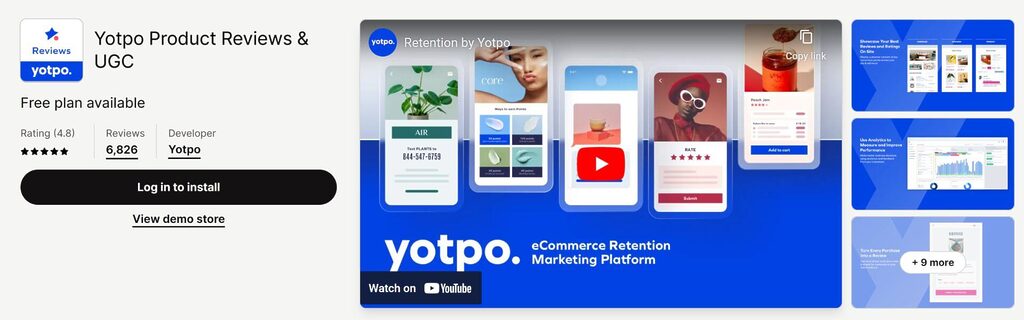
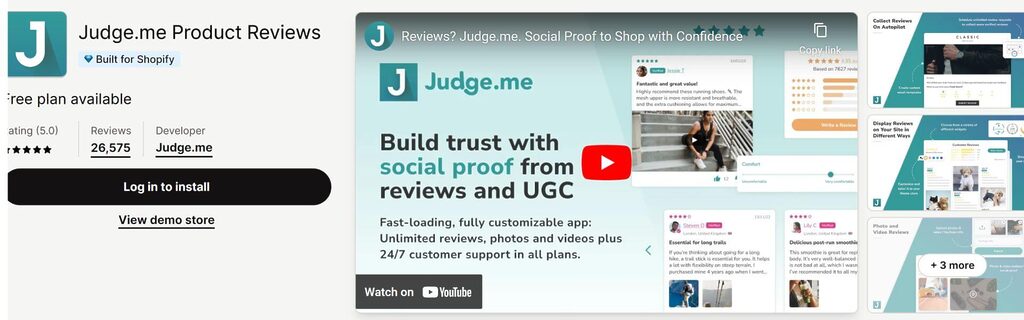
Deciding between Yotpo and Judge.me for your Shopify store involves weighing their distinct capabilities and how they align with your business goals. Yotpo offers a broad suite of marketing tools including reviews, loyalty programs, and social media integration, which is ideal for stores looking for comprehensive solutions. In contrast, Judge.me provides a more focused and cost-effective approach, specializing in streamlined review management with robust customization options.
Comprehensive Marketing Suite: Offers not just reviews but also loyalty programs and referral systems, making it an all-in-one marketing toolkit.
AI-Powered Review Requests: Utilizes artificial intelligence to optimize the timing and effectiveness of review solicitation via email and SMS.
Social Media Integration: Facilitates the sharing of customer reviews across social media platforms, enhancing brand visibility and trust.
Advanced Analytics: Provides detailed insights and analytics, helping businesses better understand customer behavior and optimize their strategies.
Cons
Cost: Yotpo’s more advanced features can be expensive, especially for small businesses, as the pricing is based on monthly order volume and feature access.
Complexity: The wide range of features can be overwhelming for small businesses or those new to using such platforms.
Slower Implementation: Due to its extensive features and capabilities, setup and customization might take longer.
Affordability: Offers a very competitive pricing structure, including a robust free plan and a reasonably priced premium option.
Ease of Use: Known for its user-friendly interface and simple integration with Shopify, making it accessible even to those with limited technical expertise.
Customization Options: Provides extensive customization of review widgets to fit the look and feel of the store, enhancing brand consistency.
Fast Performance: Lightweight widgets that do not slow down website loading times, maintaining a smooth user experience.
Cons
Limited Marketing Tools: Lacks additional marketing functionalities such as loyalty programs and extensive cross-selling features.
Advanced Analytics: could be better: While it provides essential analytics, it does not offer as deep insights as Yotpo, which might be a drawback for data-driven businesses.
Fewer Integrations: Compared to Yotpo, Judge.me has fewer integrations with other marketing and CRM tools, which could limit its functionality within a larger marketing ecosystem.
Pricing
Yotpo’s pricing model is tiered, starting with a free plan that supports basic features, suitable for small enterprises looking to start with review management. However, for more advanced features like social integration and loyalty programs, Yotpo’s premium plans, which can become quite expensive, are necessary. These plans are typically based on the volume of monthly orders and the number of features enabled. Judge.me offers a more straightforward and affordable pricing structure. Its free plan includes unlimited reviews and basic widgets, while the paid plan is priced at a flat rate and includes advanced features like photo and video reviews, Google Shopping integration, and more detailed customization options.
Integration and Ease of Use
Both platforms boast easy integration with Shopify, ensuring a smooth setup process. Yotpo’s integration allows for deep data analysis and marketing insights, which can be crucial for larger stores with complex needs. Meanwhile, Judge.me emphasizes simplicity and speed, ensuring that even stores with limited technical resources can benefit from robust review management.
Customer Support
Support is critical, especially when dealing with customer-facing aspects of your business like reviews. Yotpo offers extensive support through various channels, including email, chat, and phone, along with a comprehensive knowledge base. Judge.me, while smaller in scale, provides effective support with a focus on responsiveness and community engagement, which many users find highly beneficial.
Choosing between Yotpo and Judge.me for your Shopify store comes down to your specific needs and budget. If you require a comprehensive solution with advanced marketing tools, Yotpo is the way to go. However, if affordability and ease of use are your top priorities, Judge.me offers an excellent alternative with great value.
Nurul Afsar is a seasoned SEO expert with a decade of experience under his belt. He has a deep understanding of search engine algorithms and a proven track record of delivering outstanding results for his clients. Afsar specializes in technical SEO, on-page and off-page optimization techniques, including keyword research, link building, and content creation. He has experience working with a wide range of industries and is well-versed in the latest SEO trends and best practices. He is passionate about helping businesses succeed online and is dedicated to delivering measurable results for his clients.
If you own a WooCommerce store, optimizing your website for search engines is like discovering a treasure trove of potential customers. You could have a great store with fantastic products, but it’s like having a hidden gem down a secret alley if it’s difficult to find. Search engine optimization (SEO) is like a bright sign that guides people to your store. It’s about making your store look good and appearing at the top of search results when someone types in what they want to buy on Google. By improving your SEO, you can rank higher on search results without spending a lot on ads, which means more people can find your store easily and stay longer to shop. In today’s world, where a quick online search can determine where we shop, not focusing on SEO could result in missing out on potential customers and sales. The concept of WooCommerce SEO may seem complex, but it is quite simple and systematic.
What is WooCommerce?
WooCommerce is a flexible, open-source eCommerce plugin designed for WordPress, enabling users to transform their website into a powerful online store. Launched in 2011, it has become one of the most popular eCommerce solutions worldwide due to its ease of use, customizability, and free base product. WooCommerce provides everything needed to sell products or services online, including product management, order processing, shipping integration, and secure payments. Its extensive library of extensions and themes allows for further customization and functionality enhancement, making it suitable for businesses of all sizes. With WooCommerce, entrepreneurs can create a tailored online shopping experience to meet their unique business needs.
WooCommerce SEO Tips
Are you ready to take your WooCommerce store to the next level and attract more customers? Look no further! Our team has compiled a list of 15 indispensable SEO tips crafted specifically for WooCommerce users. By optimizing your product pages and leveraging powerful plugins, you can climb search engine rankings and increase your sales. With our proven blueprint, you can transform your online presence and supercharge your business. Don’t wait any longer. Let’s get started and watch your store’s visibility soar!
#1. Write Unique Product Descriptions for Better SEO and Sales
Creating unique product descriptions is a game-changer for WooCommerce store owners. It’s not just about listing what you sell; it’s about telling a story that connects with your customers. Each product has its personality, features, and benefits; your job is to bring that to life in words. When you craft descriptions that stand out, you’re improving your SEO by incorporating relevant keywords naturally and engaging your customers personally. This can set you apart from competitors who might use generic manufacturer descriptions.
Think about it: a unique product description is like a salesperson who works 24/7, convincing visitors why they should choose your product over others. It’s your chance to highlight what’s special about your items, from the craftsmanship behind them to the way they can enhance the buyer’s life. Be descriptive, be persuasive, but most importantly, be authentic. Use a tone that matches your brand and speaks directly to your target audience.
#2. Don’t Ignore The Product Tag
Does WooCommerce Product tag matter? Yes! They can significantly change the performance of the website. Product tags in WooCommerce are a powerful tool, often underestimated by Woocommerce store owners. Tags are like signposts that help shoppers easily navigate your store’s products. More than just simple labels, they are integral for organizing your inventory to enhance discoverability and improve user experience. Including relevant keywords in your product tags makes your products more visible to customers and search engines, effectively serving as a double-edged sword for boosting your SEO efforts.
This practice helps categorize products in more detailed and searchable ways. When customers search for specific attributes or keywords, products tagged accurately are more likely to appear in search results on your site and in search engines. This improved visibility leads to higher traffic and, potentially, conversions.
Moreover, well-optimized product tags contribute to the overall SEO health of your WooCommerce store. They help create a rich web of interconnected products, making it easier for search engines to crawl and index your site. By incorporating relevant keywords into your tags, you speak the language of your potential customers and search engines. Editing your product tags to optimize them is a strategic move that can lead to significant visibility, user experience, and sales gains.
#3. Don’t forget to Write SEO Friendly Meta Title and Meta Descriptions
Writing keyword-enriched meta titles and descriptions is a crucial strategy for anyone looking to enhance their online presence, especially for WooCommerce store owners. These text snippets are not just placeholders but powerful tools that can significantly impact your visibility in search engine results.
By thoughtfully incorporating relevant keywords into your meta titles and descriptions, you signal to search engines exactly what your page is about, increasing the likelihood of appearing in searches related to your products or services.
But why does this matter? Well, consider it your store’s first impression in the digital world. A compelling, keyword-rich meta title and description can catch the eye of potential customers, enticing them to click through to your site.
This boosts your site traffic and can improve your click-through rate (CTR), a key factor search engines consider when ranking pages. Effectively, this means that the more relevant and enticing your meta-information is, the better your chances of standing out in a crowded marketplace.
So, have you reviewed your meta titles and descriptions lately? Are they optimized to capture the essence of your products and draw in your target audience?
#4. Manage the Technical SEO of Your WooCommerce Sites
For WooCommerce store owners, technical SEO is not just important; it’s foundational for success. This aspect of SEO focuses on optimizing your website’s infrastructure, ensuring that search engines can easily crawl, index, and render your site. Why is this crucial? No matter how high-quality your content or how competitive your products are, if search engines struggle to understand and navigate your site, your visibility in search results will suffer.
Technical SEO encompasses a range of practices, from improving site speed and mobile friendliness to ensuring secure connections via HTTPS. These elements are essential for creating a positive user experience, which search engines like Google prioritize when ranking sites.
Moreover, technical SEO helps prevent issues such as duplicate content, broken links, and incorrect redirects that can negatively impact your SEO efforts.
In the competitive world of online retail, failing to address technical SEO can leave your WooCommerce store in the digital dust. Are you ensuring your store’s foundation is as strong as the products on its shelves?
#5. Product Schema for Your Products
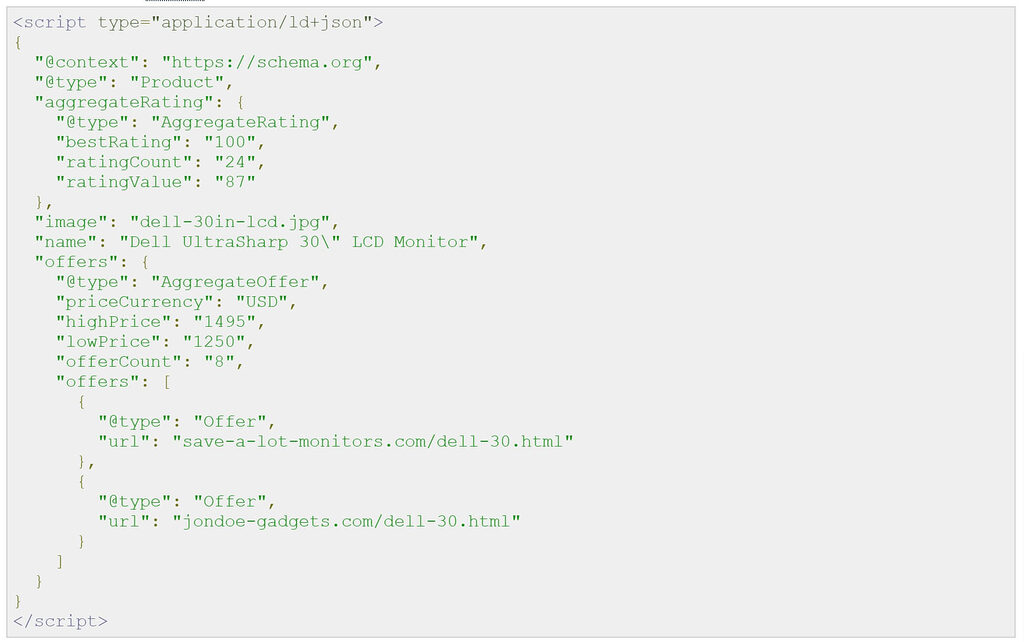
Adding product schema to your WooCommerce store is like giving search engines a cheat sheet about your products. Imagine you’re telling Google exactly what you sell, including the juicy details like prices, star ratings, and stock levels. Why is this awesome? Because it dresses up your product pages in search results with all these cool details, making them super attractive to shoppers scrolling through.
This isn’t just about making things look pretty, though. It’s like rolling out the red carpet for your products, making them impossible to ignore. Shoppers get the lowdown straight from the search page – how much it costs, if it’s in stock, and how others felt about it. It’s a fast track to getting clicks and beating the competition.
Think about it: In a world where grabbing attention is half the battle, why miss out on making your products stand out with all the bells and whistles in search results? Ready to give your products the spotlight they deserve?
#6. Take Photos of The Products by Yourself
Have you ever wondered why some online stores seem to pop up and grab your attention? A big part of that magic is high-quality images. But here’s the kicker: while it might be tempting to use the manufacturer’s photos (like many of your competitors probably do), snapping your pictures really sets you apart. Why settle for the same look everyone else has when you can showcase your products in your own unique style? It’s like giving your items their spotlight on the web stage.
Taking your own photos isn’t just about being different, though. It’s about telling your product’s personal story. Your images can capture the essence of your items in ways no one else can, highlighting special features and showcasing them in real-life settings. This makes your products more relatable and shines a light on your brand’s personality.
And guess what? Rolling up your sleeves and getting those original shots does wonders for your website’s SEO. Unique images can climb the ranks in image searches, leading curious clickers to your store. Plus, optimizing your photos means quicker load times, keeping your customers and search engines happy.
#7. Ensure the Canonical Links are Set Properly
Canonical links are an essential aspect of WooCommerce SEO, as they help maintain a clear website structure for search engines. These links act as pointers, directing search engines to your main product page when there are multiple similar pages. This effectively prevents duplicate content issues that negatively affect your site’s search rankings. By using canonical tags to designate a preferred URL ensures that search engines consolidate link signals, such as links and page metrics, to the specified URL. This enhances its authority and search visibility. This focused approach is particularly important for e-commerce sites, where products may be listed under multiple categories or variations. If you need any help with that, Trek marketing can help set the canonical properly.
#8. Implement Breadcrumbs
Breadcrumbs in WooCommerce SEO are not just navigational aids but pivotal elements that significantly enhance the search engine user experience and site structure. Essentially, breadcrumbs are a trail of links that provide a clear path from the page the user is viewing back to the homepage. This trail helps users navigate your site more efficiently, reducing the chance of frustration and bounce rates but also aids search engines in understanding your website’s hierarchy.
Implementing breadcrumbs can lead to better SEO outcomes by making your content more accessible and intelligibly categorized, which can improve your site’s ranking. They also contribute to rich snippets in search results, making your listings more appealing and informative, potentially increasing click-through rates.
WooCommerce and many SEO plugins, like Yoast SEO, offer straightforward ways to add breadcrumbs to your store. Typically, this involves enabling the feature within the plugin settings and adjusting the appearance through your theme’s options. This ensures a seamless integration with your site’s design and enhances navigability for both users and search engines.
#9. Set Permalinks to be Simple
One golden rule stands out for WooCommerce store owners aiming to optimize their SEO: simplicity is key, especially regarding permalinks. Simple, clear, and concise permalinks are more user-friendly and search engine-friendly. They make it easier for search engines to understand and index your content, significantly improving your site’s visibility and ranking.
This principle applies equally to your product pages and blog posts. For products, a straightforward permalink structure helps potential customers and search engines find your offerings without confusion. Keeping permalinks clean and timeless for blog posts ensures that your content remains evergreen. Avoiding dates or complex strings in your URLs means your posts won’t appear outdated, encouraging more traffic over time as the content continues to be relevant.
Setting up simple permalinks in WooCommerce and WordPress is straightforward. You can customize your site’s permalink settings to include post names or product names, creating a clean and efficient URL structure. This small step can make a big difference, enhancing your store’s SEO strategy and ensuring your content remains fresh and accessible for years to come.
#10. Craft Descriptive Alt text for the Images
Crafting descriptive alt text for images on your WooCommerce site plays a pivotal role in SEO by making your content more accessible and understandable to search engines. Alt text, or alternative text, provides context to images, allowing search engines to index them accurately. This boosts your store’s visibility in image search results, a key traffic source. Moreover, alt text enhances web accessibility, ensuring visually impaired users can understand images through screen readers. Strategically including relevant keywords in your alt text can further optimize your product pages, drawing in targeted traffic and potentially increasing conversion rates. Essentially, well-crafted alt text is a simple yet effective tool for improving your WooCommerce store’s online presence and accessibility.
Writing effective alt text requires a balance between being descriptive and concise while integrating relevant keywords naturally. Here’s an example for a WooCommerce product, a men’s blue denim jacket:
Poor Alt Text: “Jacket”
Better Alt Text: “Men’s Blue Denim Jacket”
Optimal Alt Text: “Men’s slim fit blue denim jacket with button-up front and side pockets.”
In the optimal example, the alt text is descriptive, clearly understanding the product’s appearance and key features. It integrates keywords naturally, such as “men’s,” “blue,” “denim jacket,” “slim fit,” and “button-up front,” which are likely search terms customers might use. This approach improves SEO by helping search engines index the image accurately, enhancing the product’s visibility in both web and image searches, and improving the shopping experience for users, especially those using screen readers.
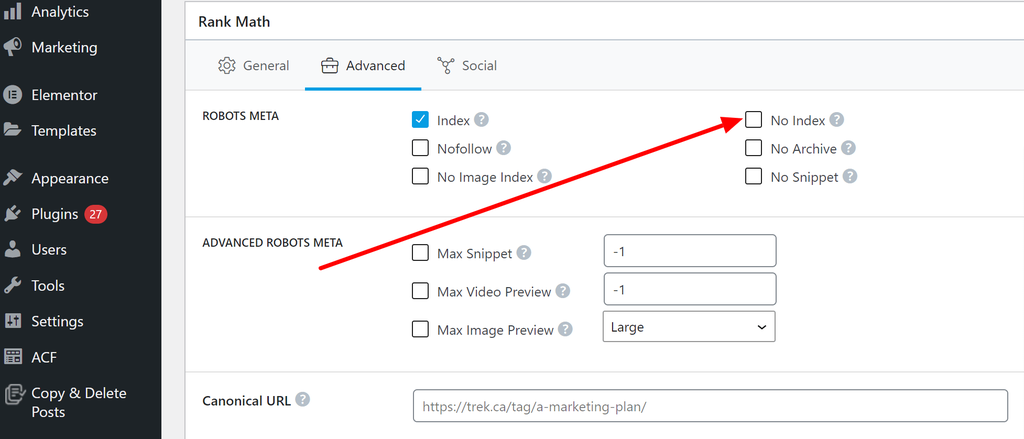
#11. Put No-Index to Thin Tag Pages
Putting a “noindex” tag on WooCommerce tag pages with thin content can significantly benefit your SEO strategy. Here’s why: Search engines like Google prioritize high-quality, content-rich pages in their search results. Tag pages, especially those with scant content, often don’t meet these criteria. They can dilute your website’s overall SEO effectiveness by spreading the search engine’s attention across many low-value pages instead of focusing on your content-rich, valuable product, and category pages.
By applying a “noindex” tag to these thin content pages, you effectively tell search engines not to include them in their index. This action helps concentrate your SEO efforts and link equity on pages that truly matter and are more likely to convert visitors into customers. It cleans up your site’s content profile, reducing the risk of being penalized for low-quality content and improving your site’s overall user experience. Plus, it streamlines the path for search engines and users to your most important pages, potentially boosting your rankings and visibility for the content that truly showcases your store’s offerings.
Here’s an example of how to do that with RankMath plugin.
#12. Provide FAQ Section for the Products and Create FAQ Schema
Incorporating a FAQ section tailored to your WooCommerce products and services is a strategic move that can significantly boost your SEO. FAQs serve multiple purposes: they directly address common customer queries, improve user experience by providing valuable information upfront, and can significantly increase your site’s visibility in search results.
By answering frequently asked questions about your products, you naturally incorporate relevant keywords into your content, making your pages more likely to rank for those queries.
Additionally, implementing FAQ schema markup is like putting up a signpost for search engines, highlighting your FAQs in a structured format they understand. This can lead to rich snippets in search results, displaying your answers directly on the search page. Not only does this increase the likelihood of clicks by providing immediate value, but it also positions your brand as an authority in your niche.
Creating content that directly answers your audience’s questions, combined with the technical SEO boost from schema markup, makes FAQs an invaluable tool for enhancing your WooCommerce store’s online presence.
#13. Create Informational Blogs Targeting Queries Related to Your Products
Crafting informational content that zeroes in on the queries related to the products on your WooCommerce site can significantly boost your SEO. This strategy draws in visitors with specific needs, enhancing the chances of conversion. It provides a natural venue for keyword optimization, as you can incorporate terms your customers use in their searches. Such content establishes your brand as a knowledgeable authority, building trust with your audience.
Additionally, it improves user engagement by providing valuable insights, keeping visitors on your site longer, and reducing bounce rates. This positive user behavior signals search engines that your content is relevant and valuable, potentially boosting your rankings.
Moreover, high-quality informational content will likely attract backlinks from reputable sites, further elevating your site’s authority and search engine visibility. In essence, by targeting customer queries with detailed, helpful content, you’re not just selling products but enhancing your WooCommerce site’s SEO, driving more organic traffic and sales.
Focus on informational content that really helps the users and is not written for bots.
#14. Use WooCommerce Optimized Theme for Better SEO
Using WooCommerce-optimized themes is crucial for better SEO because they are designed to complement an online store’s functionality and performance needs. These themes ensure your website is visually appealing and structured in a way that search engines can easily understand and rank. Optimized themes are coded to load quickly, provide mobile-friendly responsiveness, and support SEO best practices, including proper HTML markup. Your store can rank higher in search results, leading to more visibility and traffic. Choosing a WooCommerce-optimized theme lays a solid foundation for your store’s online success by enhancing user experience and SEO.
#15. Speed Up Your WooCommerce Site for SEO and Better Usability
Optimizing the speed of your WooCommerce website is vital for both user experience and SEO. A fast-loading site keeps visitors engaged, reduces bounce rates, and encourages more conversions. Search engines, especially Google, prioritize website speed in their ranking algorithms, meaning quicker websites rank higher in search results.
To optimize your store’s speed, focus on compressing images, using a caching plugin, minimizing the use of heavy plugins, implementing a content delivery network (CDN), and choosing a reliable hosting provider specialized in WooCommerce. These steps ensure your website loads quickly, providing a smooth shopping experience for your customers and boosting your visibility in search engine rankings.
There are tons of Plugins that you can use to speed up your WooCommerce site or
What are the Plugins to Use for WooCommerce SEO?
Selecting the right WooCommerce SEO plugins can significantly enhance your store’s search engine visibility, drive more traffic, and increase sales. Here’s a list of top WooCommerce SEO plugins that are highly recommended for improving various aspects of SEO for your online store:
Selecting the right WooCommerce SEO plugins can significantly enhance your store’s search engine visibility, drive more traffic, and increase sales. Here’s a list of top WooCommerce SEO plugins that are highly recommended for improving various aspects of SEO for your online store: 1. Yoast SEO for WooCommerce Yoast SEO is one of the most popular SEO plugins for WordPress, and the WooCommerce add-on integrates seamlessly, offering tailored features for online stores.
Key Features: It helps optimize your product pages and categories, generates SEO-friendly meta tags automatically, and includes schema.org data to help search engines understand your products better. It also offers readability analysis to make your content more user-friendly.
Price: Free and Premium
2. Rank Math SEO Rank Math is a fast-growing SEO plugin that offers a rich set of features designed to optimize your store easily.
Key Features: It includes a built-in WooCommerce SEO module, which helps you optimize your products with practical suggestions. Features like automated image SEO, rich snippets support, and advanced SEO analytics make Rank Math a strong contender.
Price: Free and Premium
3. All-in-One SEO Pack
This plugin is another favorite among WordPress users, providing comprehensive SEO features that are easy to use for beginners and advanced users alike.
Key Features: All-in-One SEO Pack includes support for WooCommerce, offering features like sitemap generation, meta tag optimization, and Schema markup. It also provides SEO integration for custom post types.
Price: Free and Premium
To improve the SEO of your WooCommerce store, you need to plan smartly, update your strategy regularly, and make persistent efforts. Our WooCommerce SEO tips can guide you to achieve better search rankings, attract more visitors, and boost sales. SEO is a marathon, so consistently applying these practices, staying updated about the latest SEO advancements, and monitoring your site’s performance can ensure sustained growth. Begin your journey to SEO excellence today and enhance your store’s visibility in search results for long-term success.
Nurul Afsar is a seasoned SEO expert with a decade of experience under his belt. He has a deep understanding of search engine algorithms and a proven track record of delivering outstanding results for his clients. Afsar specializes in technical SEO, on-page and off-page optimization techniques, including keyword research, link building, and content creation. He has experience working with a wide range of industries and is well-versed in the latest SEO trends and best practices. He is passionate about helping businesses succeed online and is dedicated to delivering measurable results for his clients.
Hey there, awesome restaurateurs! We know you put your heart and soul into crafting delicious dishes, creating warm atmospheres, and ensuring every patron leaves with a smile. But have you ever considered the power of the digital realm in filling those cozy seats? Just as you’d perfect a recipe, refining your online presence with SEO (Search Engine Optimization) can be the secret ingredient to making your restaurant the talk of the town. Wondering why? Let’s see why doing SEO for restaurants can significantly improve the performance of your business.
1. Everyone’s Online, Including Your Hungry Customers
In today’s fast-paced digital age, grabbing your customer’s attention online is just as crucial as enticing them with a delicious aroma from your kitchen. A recent study showed that over 80% of consumers search online before purchasing. For restaurants, this statistic is golden. When potential patrons are in a new area or looking to try something new, they first go to their search engine. Whether they’re searching for “best sushi places in town” or “romantic Italian restaurants,” if you’re not appearing in these searches, you’re basically keeping your restaurant’s doors closed to a world of opportunities. SEO ensures that your restaurant doesn’t remain an unsung hero but stands proud and tall in the vast digital landscape.
2. Online Reviews and Rating Matter
Remember the last time you decided to try a new restaurant? Chances are, you read a couple (or several) reviews before making your decision. In fact, BrightLocal’s survey suggests that a whopping 91% of consumers trust online reviews as much as personal recommendations. Here’s where SEO intertwines with your online reputation. Search engines like Google value user-generated content, such as reviews and ratings. They see them as indicators of your restaurant’s quality and credibility. So, if you’re receiving positive reviews and responding actively to feedback, search engines will give you a little digital pat on the back, pushing you higher in the rankings. It’s like word-of-mouth, but on a massive internet scale.
3. Cost-Effective Marketing
SEO stands out as one of the most cost-effective marketing strategies in an era where every penny counts. Think about traditional advertising: you pay for a space in a magazine, a spot on the radio, or a billboard. But once the ad’s duration is over, its impact diminishes. With SEO, it’s different. It’s the gift that keeps on giving. Initial investments in optimizing your website or setting up a blog can continue to attract visitors months or even years later. Moreover, as your online presence grows and as you accumulate reviews, articles, or backlinks, these elements work collectively, creating a snowball effect. Over time, instead of paying for every single customer’s click or impression, the cost per acquisition decreases, giving you more bang for your buck.
4. Outshine the Competition
The restaurant business is, without a doubt, a competitive one. From local diners to high-end eateries, every place is vying for the top spot in a customer’s heart (and stomach). With SEO, you’re not just competing on taste and ambiance but also on visibility. Consider this: a potential customer is craving a juicy burger. They might type in “best burgers near me.” If your restaurant serves burgers that are out of this world, but your online visibility is low, another burger joint might steal the spotlight. SEO ensures that your delectable dishes get the limelight they deserve. Plus, appearing at the top of search results can be perceived as a mark of trustworthiness and authority in your niche. It’s like having the best seat in a food court – you’re bound to get noticed more!
5. Catering to Mobile Users
Smartphones have revolutionized the way we live – and eat! Picture this scenario: Jake’s wandering around the city, and a sudden craving for tacos hits. He doesn’t look for the nearest billboard or ask a stranger; he whips out his phone and searches for “tacos nearby.” With local SEO tactics – like optimizing for “near me” searches and ensuring your website is mobile-friendly – your restaurant could be the first one Jake sees. Google’s algorithm is increasingly prioritizing mobile-optimized sites, and since local searches often lead to direct action (like a visit or a purchase), it’s paramount for restaurants to embrace local and mobile SEO strategies.
6. Building Lasting Relationships
While SEO is instrumental in attracting new customers, it’s also about nurturing existing ones. A robust online presence allows you to share your restaurant’s journey, its ethos, special events, or even behind-the-scenes content. Think about introducing your chef through a blog post or sharing the history of your century-old family recipe. This positions you favorably on search engines and allows customers to form a deeper connection with your establishment. It’s the difference between being just another restaurant and being THEIR restaurant. By sharing stories and engaging content, you’re inviting patrons into your extended digital family, fostering loyalty and repeat visits.
7. The Gift that Keeps on Giving
SEO is not a sprint; it’s a marathon. While paid advertisements might give you an immediate influx of traffic, your budget limits their longevity. SEO, on the other hand, is sustainable. By consistently optimizing your website, updating content, and keeping abreast of the latest SEO trends, your restaurant will continually attract organic (unpaid) traffic. And as search engines become smarter, they’ll recognize and reward your continuous efforts and improvements to your digital space, ensuring a long-term return on investment.
8. Local Directories Boost Credibility
While many focus on the bigger picture, the local scene is where restaurants thrive. SEO is not just about search engines like Google or Bing; it’s also about being listed in prominent local directories like Yelp, Zomato, and TripAdvisor. Not only do these platforms provide another venue for reviews and customer feedback, but they also have high domain authority, which means a backlink from them can significantly boost your website’s credibility. Ensuring your restaurant’s information is consistently accurate across all these platforms is key. It reinforces trust and makes sure a potential customer can reach you without a hiccup.
9. Voice Search is the New Frontier
“Hey Siri, find the best vegan restaurants near me!” With the proliferation of voice-activated devices like Amazon’s Alexa, Google Assistant, and Apple’s Siri, voice search is becoming increasingly popular. This newer search form often relies on natural language, full sentences, or questions. Optimizing your content for voice search often means making it more conversational and focusing on long-tail keywords. This could be a game-changer for restaurants, as voice searches are often about immediate needs – like hunger!
10. An Engaging User Experience
SEO isn’t just about keywords or backlinks; it’s also about providing a great user experience (UX). Google’s algorithms consider website speed, mobile optimization, site structure, and readability when ranking sites. A fast-loading, easy-to-navigate website can drastically reduce bounce rates (people immediately leaving your site). When customers visit your website to check out the menu, read about the chef, or make a reservation, a smooth and enjoyable UX can make the difference between them clicking away and making a booking. It’s a blend of hospitality and digital finesse!
In essence, just as a chef meticulously crafts each dish, mastering your online presence with SEO is essential in today’s digital landscape. By embracing this strategy, your restaurant will flourish not only through its culinary offerings but also in the vast world of the web, attracting more enthusiasts to savor your specialties. Remember to sprinkle digital magic online while you focus on perfecting flavors and ambiance. Here’s to bustling dining rooms and memorable meals!
Nurul Afsar is a seasoned SEO expert with a decade of experience under his belt. He has a deep understanding of search engine algorithms and a proven track record of delivering outstanding results for his clients. Afsar specializes in technical SEO, on-page and off-page optimization techniques, including keyword research, link building, and content creation. He has experience working with a wide range of industries and is well-versed in the latest SEO trends and best practices. He is passionate about helping businesses succeed online and is dedicated to delivering measurable results for his clients.
B2B (Business-to-Business) marketplaces for finding top agencies have become increasingly popular as businesses look to outsource specific tasks or projects to specialized agencies. Here are some of the best B2B marketplaces to find top agencies:
Upwork: Originally focused on freelancers, Upwork has expanded to include agencies offering a wide range of services, from marketing and design to software development.
Clutch.co: This platform specializes in identifying leading software and professional services firms. It offers detailed client reviews, services offered, and portfolio items.
Toptal: Toptal boasts a network of the top 3% of freelance talent, including developers, designers, and finance experts. They also cater to agencies.
Dribbble: While primarily known as a platform for designers to showcase their portfolios, many agencies also use Dribbble to display their work and attract clients.
Behance: Similar to Dribbble, Behance is a platform where creative professionals, including agencies, can showcase their portfolios.
Sortlist: This platform matches businesses with the right marketing, advertising, and PR agencies based on their needs and budget.
Agency Spotter: This platform specializes in helping businesses find top advertising, design, and marketing agencies.
DesignRush: A B2B marketplace that connects brands with agencies. DesignRush allows businesses to search and compare agencies based on their expertise, reviews, and previous work. They categorize agencies based on areas such as web design, digital marketing, software development, and more. We have a profile on DesignRush that may help you understand better about Trek Marketing.
Expertise: While not a traditional B2B marketplace, Expertise identifies and promotes the best local experts in various fields, including marketing and design agencies.
LinkedIn: Many agencies have a strong presence on LinkedIn, and the platform’s search and filtering capabilities can help businesses find agencies that fit their needs.
Finding the right agency partner can make or break your business growth. This infographic highlights the top B2B marketplaces where you can easily explore, compare, and connect with vetted, high-quality agencies.
In the digital age, finding the right agency to meet your business needs has never been easier. With a plethora of B2B marketplaces available, businesses can now seamlessly connect with top-tier agencies tailored to their specific requirements. Whether you’re looking for design expertise, marketing strategies, or software solutions, platforms like Upwork, Clutch.co, and DesignRush have revolutionized the way businesses and agencies collaborate. As you embark on your search, remember to leverage reviews, portfolios, and direct discussions to ensure a perfect fit for your project.
Nurul Afsar is a seasoned SEO expert with a decade of experience under his belt. He has a deep understanding of search engine algorithms and a proven track record of delivering outstanding results for his clients. Afsar specializes in technical SEO, on-page and off-page optimization techniques, including keyword research, link building, and content creation. He has experience working with a wide range of industries and is well-versed in the latest SEO trends and best practices. He is passionate about helping businesses succeed online and is dedicated to delivering measurable results for his clients.
Search Engine Optimization (SEO) is an essential aspect of digital marketing, and it can be a challenging task for website owners and digital marketers. However, the right tools can make SEO easier and more effective. One of the most useful tools for SEO is chrome extensions, which can be added to the Google Chrome web browser to enhance its functionality. These extensions can provide valuable information on keywords, backlinks, technical suggestions, and more. This article will discuss some of the best chrome extensions for SEO that can help you improve your website’s search engine rankings and visibility. Whether you’re a website owner, marketer, or SEO professional, these extensions will make your job easier and more efficient.
What is a chrome extension?
A chrome extension is a small software program that can be installed in the Google Chrome web browser to add extra functionality. These extensions can be used to add new features to the browser, change its behavior, or integrate with other websites or services. Ad blockers, password managers, and website optimization and analysis tools are common examples of chrome extensions.
Chrome extensions are typically developed by third-party developers and are available for download in the Chrome Web Store. Once installed, the extension will appear as an icon in the browser’s toolbar, and users can interact with it through the icon or by right-clicking on a webpage.
There are a number of Chrome extensions that can assist with SEO (Search Engine Optimization) tasks. The capabilities of all SEO tools, including those available as Chrome extensions, vary. Some may excel at providing keyword-related data, while others may specialize in providing backlink data. Furthermore, some extensions may provide more comprehensive technical recommendations than others. There are numerous variations.
Several chrome extensions available can help with SEO by providing quick access to metadata for a webpage. One such extension is “SEO Meta in 1 Click”, which allows you to view important metadata for a webpage, such as the page title, meta description, and header tags, all in one place. This can help optimize your pages for search engines and easily check the metadata of competitors’ pages. It will save tons of time for you as it loads very fast. Besides the metadata, you can also check other important information like robots.txt, sitemap, the number of headers on a page, the alt text of the images, and more.
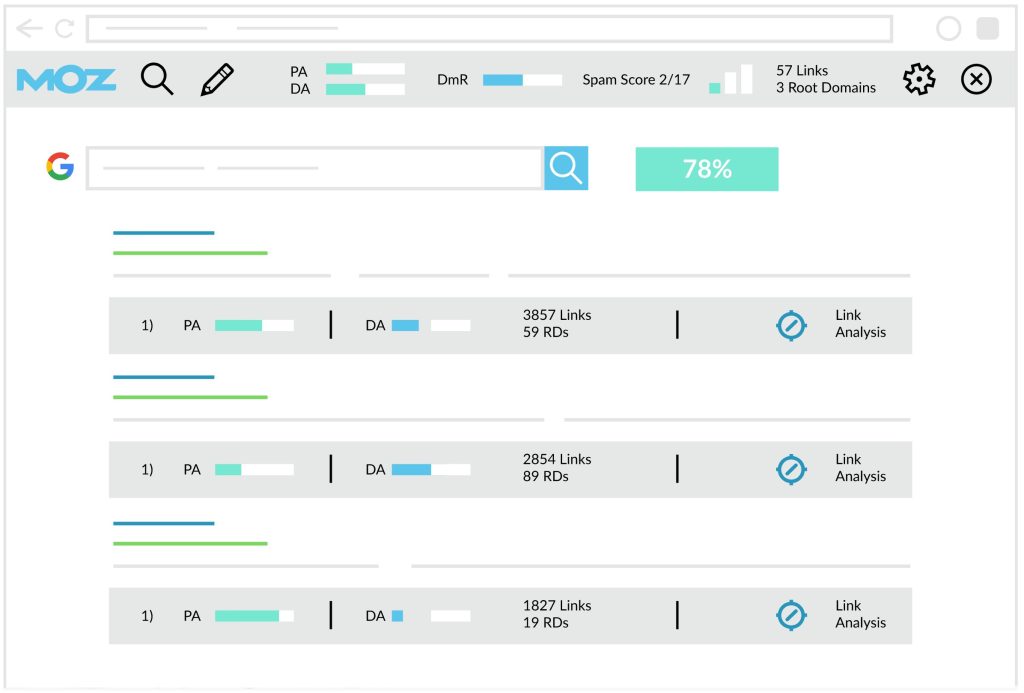
MozBar is a browser extension developed by Moz, a company that provides SEO and marketing analytics software. The extension is available for Google Chrome and Firefox, and it is designed to provide users with quick access to Moz’s metrics for the webpage they are currently visiting. It allows users to check important SEO metrics such as Domain Authority (DA) and Page Authority (PA) for the website, the number of backlinks pointing to the page, and other data from the Moz API. Additionally, MozBar can highlight page elements, such as links, and check the page’s backlinks directly from the search results page. It also allows users to access some of Moz’s other tools, such as the On-Page Grader and Moz Analytics.
Price: Free and Paid
SEO-Quake by SEMrush
SEOquake is a browser extension developed by SEMrush, a popular all-in-one marketing tool that offers various features such as keyword research, competitor analysis, and backlink monitoring. The extension is available for Google Chrome, Firefox, and Safari. It provides a wide range of SEO-related data and analysis tools to help users optimize their websites for search engines.
Once installed, SEOquake will appear as an icon in the browser’s toolbar. When you visit a website, you can click on the icon to see various data and metrics, such as Domain Authority (DA), Page Authority (PA), the number of backlinks, the number of indexed pages, and more. Additionally, you can use the extension to perform a “Page Audit” that will analyze the webpage for various SEO-related issues such as broken links, missing alt tags, and more.
SEOquake also has a keyword density analysis tool that allows you to check the use of keywords on a webpage and an internal/external links analysis tool that helps you to see the number of internal and external links on the page. It also has a SERP overlay feature that lets you see the SEO metrics of the search engine results page (SERP) for a specific keyword and a comparison feature that lets you compare SEO metrics for multiple pages at once.
Overall, SEOquake is a comprehensive SEO tool that offers a wide range of features, making it an excellent option for website owners, marketers, and SEO professionals looking to improve their website’s search engine rankings and visibility.
SEO Minion is a browser extension for Google Chrome, Firefox, and Brave that provides a variety of tools and features to help users with their search engine optimization (SEO) efforts. The extension is designed to be easy to use and provides a wide range of data and metrics to help users optimize their websites for search engines.
SEO Minion offers many features, such as:
On-page SEO analysis: Analyzes the webpage for various SEO-related issues such as missing alt tags, broken links, and more.
SERP preview: Allows you to see how your website will look in the search engine results pages (SERP) for a specific keyword.
Broken link checker: This allows you to check for broken links on your website.
Redirect checker: Allows you to check the redirects for a specific URL.
HTTP header checker: Allows you to check the HTTP headers for a specific URL.
Robots.txt checker: Allows you to check the contents of a website’s robots.txt file.
Structured data checker: Allows you to check for structured data on a webpage.
SERP analysis: This allows you to see the top organic search results for a specific keyword and view the SEO metrics for each result.
Overall, SEO Minion is a powerful and user-friendly chrome extension that offers a variety of tools and features to aid users’ SEO efforts.
Redirect Path is a browser extension for Google Chrome that helps users identify and troubleshoot redirects and other HTTP headers on a webpage. Once installed, the extension will appear as an icon in the browser’s toolbar. When you visit a webpage, you can click on the icon to see a variety of data and metrics related to the page’s redirects, headers, and other information.
The extension provides a detailed report of all the redirects, headers, and status codes when a browser requests a specific URL. It will show each step of redirects, the HTTP status code associated with each step, and the headers sent or received. It also indicates if a redirect is a 301 or 302 redirect or if it’s a client-side redirect, like a meta-refresh. Additionally, the extension also offers some features for broken link checkers, showing the website’s security information and the server response time.
Redirect Path is a useful tool for web developers, SEO professionals, and website owners to ensure that their website’s redirects are set up correctly and identify any issues impacting search engine visibility or user experience. It can help detect redirect chains, looping redirects, redirects to unexpected destinations, and other issues that can affect website performance and SEO.
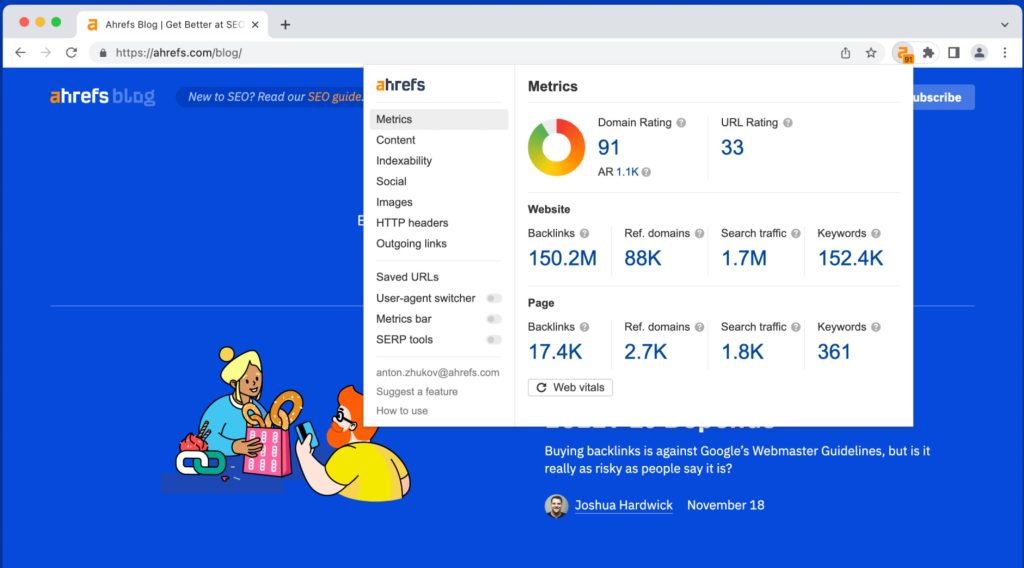
The Ahrefs SEO Toolbar is a browser extension for Google Chrome that provides users with quick access to Ahrefs’ metrics for the webpage they are currently visiting. Ahrefs is a popular all-in-one SEO tool that offers various features such as keyword research, competitor analysis, and backlink monitoring. The extension is designed to provide users with essential SEO metrics such as Domain Rating (DR), Ahrefs Rank (AR), and URL Rating (UR) for the website, as well as the number of backlinks pointing to the page, organic search traffic, and other data from the Ahrefs API.
The extension also allows users to check the page’s backlinks directly from the search results page. Also, it allows users to see the organic search positions for the website, the number of organic keywords the website is ranking for, and the organic traffic it’s getting. Additionally, the Ahrefs SEO Toolbar also allows users to check the social metrics for a webpage, such as the number of shares on Facebook, Twitter, and LinkedIn.
Overall, the Ahrefs SEO Toolbar is helpful for website owners, marketers, and SEO professionals looking to improve their website’s search engine rankings and visibility. It provides quick access to important SEO metrics and backlink data, making it easier to identify areas for improvement and track progress over time.
Keyword Surfer is a browser extension for Google Chrome that helps users research keywords and understand the search intent behind them. The extension is designed to be easy to use and provides a wide range of data and metrics to help users optimize their websites for search engines.
Once you have installed the extension, you can see data on search volume, CPC (cost per click), and competition for any keyword you type into the Google search bar. As you type, the extension will show the keyword’s estimated search volume, CPC, and competition data. Additionally, you can use the Keyword Surfer to get a list of related keywords that you can use to optimize your website’s content.
The extension also allows users to see the organic search results for a specific keyword and view the SEO metrics for each result, such as Domain Authority (DA) and Page Authority (PA). With this data, users can identify the most successful website ranking for the keywords they are targeting and use that information to inform their optimization strategies.
Who will be benefitted from keyword surfer?
Website owners, marketers, and SEO specialists can benefit from using Keyword Surfer to raise their website’s search engine rankings and visibility. It makes it simpler to identify profitable keywords, comprehend search intent, and inform content development strategy by giving instant access to crucial keyword-related data.
Meta SEO Inspector is a browser extension for Google Chrome that allows users to view and analyze the metadata of a webpage. Metadata refers to the information embedded in a web page’s HTML code but is not visible to users. It includes elements such as the page title, meta description, header tags, and more. This information is important for search engine optimization (SEO) as it helps search engines understand the content and relevance of a webpage.
Once you have installed the extension, you can use it to view important metadata for the webpage you are currently visiting. The extension will show the page title, meta description, header tags, and other metadata in a user-friendly format. Additionally, it also allows users to see the HTTP headers and the structured data of a webpage.
Meta SEO Inspector also allows users to validate the structured data on a webpage against the schema.org standards and check for any errors. This can be helpful for website owners and SEO professionals to ensure that their structured data is implemented correctly and to identify any issues that may be impacting search engine visibility or user experience.
Overall, Meta SEO Inspector is a useful tool for website owners, marketers, and SEO professionals looking to improve their website’s search engine rankings and visibility. It provides quick access to necessary metadata and structured data, making it easier to optimize your website’s metatags and structured data for search engines.
The Grammarly Chrome extension can help ensure that the content on a website is clear, well-written, and free of grammatical errors. This can help improve the overall user experience and make visitors more likely to stay on the website and engage with the content. Additionally, well-written content can help improve the website’s search engine rankings, as search engines may favor sites that provide high-quality, relevant content. Therefore, using Grammarly Chrome Extension can be an excellent way to improve the SEO of a website by ensuring that the content is well-written, clear, and free of errors.
SimilarWeb is a website analysis tool that offers information about website traffic, demographics, engagement, and competitors. Users can quickly and easily access this information while browsing the web with the SimilarWeb Chrome extension.
The SimilarWeb service offers a variety of features, including website traffic data, search engine optimization (SEO) analysis, and audience demographics. The traffic data includes:
Information on the number of visitors to a website.
The sources of that traffic.
The geographic location of the visitors.
The SEO analysis includes information on the website’s search engine rankings, backlinks, and keyword rankings. The audience demographics include information on the age, gender, and interests of the website’s visitors.
From an SEO perspective, SimilarWeb can be a useful tool for understanding the competition, identifying new opportunities for driving traffic, and tracking progress on improving search engine rankings. Additionally, the tool can be used to identify the best-performing pages on a website and which pages need improvement.
In summary, SimilarWeb Chrome Extension and service is a tool that can provide website owners with a wealth of data and insights on their website traffic, demographics, engagement, and competitors, which can be useful for improving search engine optimization (SEO) and overall online performance.
How to Add an Extension in Chrome
New to Chrome extensions? Here’s how to add them:
Open the Chrome Web Store.
Search for the extension name.
Click Add to Chrome.
Confirm by selecting Add Extension.
Once added, you’ll see it in the Chrome toolbar—click the icon anytime to use it.
Tip: Install extensions only from trusted publishers to avoid performance or security issues.
How Many Chrome Extensions Can I Install?
There is no set limit on the number of Chrome extensions you can install on your browser. However, too many extensions can slow down your browser and use up more memory, so it’s generally a good idea to install only the ones you need and use regularly. Additionally, you can always disable or remove the extensions you are not using.
Pro Tips for Using SEO Chrome Extensions
Don’t install too many: Too many extensions can slow down Chrome.
Keep them updated: Updates often contain important security and performance fixes.
Combine tools: Use a mix of keyword, audit, and metric tools for comprehensive insights.
Stay safe: Only use Chrome extensions from official sources to avoid security issues.
Using the best SEO Chrome extensions empowers you to spot issues, uncover opportunities, and make data-driven decisions faster—allwithout leaving your browser. Whether you’re doing keyword research, on-page audits, or backlink checks, the right extension setup will make your SEO workflow smarter and more efficient.
Nurul Afsar is a seasoned SEO expert with a decade of experience under his belt. He has a deep understanding of search engine algorithms and a proven track record of delivering outstanding results for his clients. Afsar specializes in technical SEO, on-page and off-page optimization techniques, including keyword research, link building, and content creation. He has experience working with a wide range of industries and is well-versed in the latest SEO trends and best practices. He is passionate about helping businesses succeed online and is dedicated to delivering measurable results for his clients.


 855.686.4649 ext.707