×
  • Leading Digital Marketing Agency
  • 900+ Websites Launched
  • $100M+ Client Revenue Generated


    Content Repurposing at Scale: How E-Commerce Brands Can Stretch Every Idea Across Multiple Platforms

    Content Repurposing at Scale for E-Commerce

    If your e-commerce brand is struggling to keep up with the constant demand for new content, it’s time to rethink your approach. The smartest marketers in 2025 aren’t working harder—they’re working smarter by repurposing every great idea across multiple channels. Content repurposing at scale ensures your best insights reach wider audiences, drive more sales, and maximize your marketing ROI without reinventing the wheel.

    In a fast-moving digital environment, brands no longer have the luxury of letting valuable ideas go unused after a single post or campaign. By systematically breaking down and distributing content, businesses create more customer touchpoints, improve brand awareness, and extract more value from existing investments. This results in increased traffic, higher conversion rates, and a more agile marketing operation that consistently delivers results.

    A poster with a text written content strategy

    Adopting a Repurposing Mindset

    The old way of content marketing focused on single-use blog posts or social updates. Today, the most successful e-commerce brands see every content asset as a starting point for multi-channel distribution. This mindset shift—viewing content as modular and reusable—allows your team to get 5-10x the value from every idea, while staying visible everywhere your customers spend time.

    Embracing a repurposing mindset requires leadership buy-in and a culture of continuous optimization. Teams must collaborate across channels, share data and insights, and proactively look for new ways to revive high-performing content. Over time, this approach reduces creative fatigue and ensures that marketing investments continue to pay dividends long after the first publish date.

    Real-World Examples of Content Atomization

    Content atomization breaks down larger pieces into smaller, channel-specific assets. For example:

    • Blog Posts become LinkedIn updates, Instagram carousels, and email newsletter tips.
    • Product Guides are repurposed into YouTube video scripts and FAQ sections.
    • Case Studies turn into social proof graphics and sales enablement material.

    Trek.ca works with e-commerce clients to map every content idea across the entire digital funnel, ensuring no asset sits idle.

    Consider these additional scenarios:

    • Webinars and Live Streams are edited into short highlight reels for social media and packaged as lead-generating downloads.
    • Expert Interviews are transformed into quote graphics, podcast episodes, and authority-building blog posts.
    • Monthly Promotions are repurposed into recurring campaign frameworks, improving efficiency for future launches.

    Through content atomization, brands achieve greater message consistency and maintain an active presence across all key platforms, ultimately expanding their digital footprint and customer engagement with minimal additional effort.

    Illustration of mobile UX and prototyping for e-commerce conversion optimization

    Workflows and Tools for Scaling Repurposing

    Effective repurposing at scale requires clear processes and the right tech stack. Leading brands use collaboration platforms, AI writing tools, and editorial calendars to plan content breakdowns in advance. A typical workflow might include:

    1. Creating long-form content as the foundation.
    2. Assigning team members to adapt sections for email, social, or video.
    3. Using tools to track distribution and measure performance across channels.

    This approach streamlines production and ensures brand consistency.

    Recommended tools and best practices include:

    • Content Planning Software like Trello or Asana to manage ideas and deadlines.
    • AI-Powered Editing Tools such as Grammarly or Jasper for efficient copy editing and cross-channel adaptation.
    • Analytics Platforms like Google Analytics and social media dashboards to monitor engagement and identify repurposing opportunities.

    By investing in robust workflows and proven technologies, brands can reduce bottlenecks, accelerate turnaround times, and ensure that every repurposed asset aligns with business objectives.

    How Trek.ca Powers Content Repurposing for E-Commerce

    Trek.ca’s content marketing strategies are built for efficiency and long-term impact. We develop repurposing frameworks tailored to each client’s goals, audience, and resources. Our team ensures that every asset supports SEO, social engagement, and conversion throughout the buyer journey. We also provide content calendar templates and strategy sessions to help in-house teams maintain momentum.

    Clients benefit from our hands-on approach, which includes detailed roadmaps for scaling content, regular performance reviews, and ongoing optimization consulting. Whether you need to turn a single blog post into a multi-touch campaign or develop a full-funnel content strategy, Trek.ca leverages industry best practices and cutting-edge tools to maximize your marketing ROI.

    With Trek.ca, e-commerce brands can confidently move from ad hoc content creation to a sustainable, results-driven system that fuels long-term business growth.

    Final Thoughts on Content Repurposing at Scale

    The future of e-commerce content is scalable, strategic, and omnichannel. By adopting a repurposing mindset and proven workflows, your brand can stretch every idea further, outpace competitors, and drive sustained growth in 2025 and beyond.

    Brands that embrace repurposing not only see better marketing performance but also build stronger, trust-based relationships with their customers through consistent, high-quality touchpoints. As the digital landscape becomes more crowded and competition intensifies, the ability to quickly adapt and maximize every content asset will determine the winners in online retail.

    Contact our team for a customized content marketing consultation and start maximizing your digital presence today.

    Your simple guide to marketing ROI

    Whenever an e-commerce business is looking at which digital marketing efforts to invest in, the first thing they should determine is their return on investment (ROI). The ROI allows you to project which efforts are becoming profitable for the company and at the most basic level, concludes which transactions are making the most revenue. So, if this is the first time you’ve heard digital marketing and ROI in the same sentence, it’s worth carrying out the equations yourself to test which investments your business is most benefiting from. 

    What is marketing ROI? 

    Return-on-investment (ROI) is a performance measure that’s used to calculate the efficiency of marketing investments. The ROI is directly measured by the amount on return there is on a particular investment, after subtracting the initial investment cost. 

    How do you calculate your ROI? 

    If you’re looking to calculate your businesses’ ROI, you’ll need to input your numbers into a simple formula — the benefit (or the return) of the investment is subtracted by the cost of the investment. The result should be then expressed as a percentage or a ratio. 

    Understanding your ROI

    Once you complete your ROI calculation you will be able to use it as a rudimentary gauge to understand the profitability of your investment. So, whether your company is looking to start up some search engine optimization or invest more in pay-per-click advertising, the calculation will help you to interpret the opportunities available before you. This gives you a better understanding of how much you can afford to invest in marketing monthly and be able to calculate your return on that investment to know if you should be putting more money into your digital strategy. 

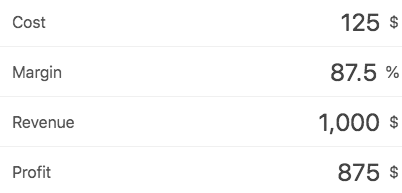
    For example, if an e-commerce business owner invests $250 in email marketing, to calculate their ROI, they would need to determine their profits of the investment. So, if one of their monthly newsletters made $1,000 and it cost $125 to create (two newsletters monthly are $250 total, $125 each), the calculation would be, $1,000 – $125 = $875, which means their ROI is 87.5%. 
    How to get in contact with a profitable ROI marketing agency

    When you’re on the hunt for an ROI marketing agency that’s dedicated to increasing your e-commerce conversions, it’s also a good idea to consider non-financial elements as well. These could include how the company is getting you likes and follows on your social channels, traffic to your website or even how well their copy is increasing the trust among your target audience. While all the above are not immediate returns on your initial investment, they do indirectly boost the potential for purchases and allow you to better develop your customer relationships long-term. 

    Do you have more questions about your marketing ROI and how to strategically use it to increase your conversions? Drop a comment below and we will do our best to answer your questions.