855.686.4649 ext.707


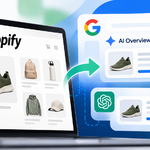
As ecommerce discovery evolves beyond traditional search results, the ability of category pages to be understood, cited, and trusted by AI search systems becomes essential. This article provides a practical, platform-agnostic framework for ecommerce brands to enhance AI search visibility, focusing on making category pages citation-ready for Google AI Overviews and LLM referrals in 2026.
Why Category Pages Often Miss AI Citations
Traditional category pages face several challenges in AI search environments. Weak entity signals, minimal category descriptions, inconsistent review language, and lack of regional context reduce the likelihood of being cited. Product pages alone cannot satisfy AI systems summarizing broader shopping intents, making strong category pages critical. For related ecommerce SEO guidance, see Winning Traffic in Underserved Niches: The Ecommerce SEO Advantage.
Entity Signals and AI Understandability
AI systems rely on clear entity associations to understand and trust content. A category page with weak or missing entity signals is less likely to be referenced in AI summaries or LLM referrals. For more on AI-assisted search readiness, read Feeding Data to ChatGPT: Practical Ways to Use Your Own Data for Better Outputs.
The Role of Reviews and Regional Context
Consistent, AI-friendly review language strengthens trust and relevance. Additionally, providing regional context, like shipping policies and returns, increases the chances of being cited for location-based queries. See also Localizing E-Commerce Marketing for French-Speaking Canadian Markets.

Building a Citation-Ready Category Page
Improving category page components ensures AI systems extract useful answers. Focus on enhancing headings, support copy, internal links, brand reinforcement, and trust cues like reviews. For a related look at internal linking and content structure, explore this guide.
Optimizing Headings and Support Copy
Use clear, hierarchical headings to establish structure and relevance. Strong introductions and explanatory text under each heading help AI understand the scope and intent of the category. You can also review How to write great SEO titles as part of your overall strategy for stronger search-focused copy elements.
Strengthening Brand and Entity Signals
Reinforce your brand and key entities through mentions in support copy, ensuring AI associates your page with trusted names and concepts. Confirm that all backlinks and references align with your key entities.
Enhancing Trust with AI-Readable Reviews
Incorporate well-structured, consistent reviews to provide AI with trust signals. Use schema markup to ensure AI reads this information correctly, increasing the chances of citations.
Mapping Queries to Category Content
Understand how actual buyer queries—such as comparisons, use cases, and regional questions—interact with your content. Structure FAQs and create editorial assets to support long-tail AI prompts. For more on matching content to user intent, see this related resource.
Supporting Real-World Buyer Language
Prioritize common AI search queries by addressing product comparisons, specific use cases, and regional availability directly on the category page or through linked FAQs. A helpful companion piece is Winning Traffic in Underserved Niches: The Ecommerce SEO Advantage.
Leveraging Adjacent Editorial Content
Use blog posts and informational articles to supplement category content. For example, a detailed post on “How to Choose the Best Ski Jacket in Canada” could reinforce the main category page and improve AI retrieval chances. For broader ecommerce content planning, review How to Write Effective Blog Posts for E-Commerce: Structure, Tips & SEO Best Practices.
Maintaining Schema, Review Language, and Feed Readiness
Regularly review schema markup, ensure review language remains consistent, and keep product feeds updated. These operational checks support discovery across search, shopping, and AI-generated references. For related shopping-surface visibility, see What are Google Shopping results and how can they affect your brand?

Ensuring Schema Hygiene
Regularly audit your structured data to confirm that AI can accurately interpret product information, pricing, and reviews. This is especially crucial before major catalog updates or promotional periods. For a broader technical review process, explore What’s Included in a Professional SEO Audit (And Why It Matters).
Synchronizing Product Feeds and Reviews
Keep product feeds in sync with site content, ensuring AI has access to the most current inventory, pricing, and review data. This reinforces your visibility on AI-driven shopping surfaces. Related reading: What are Google Shopping results and how can they affect your brand?.
Tracking AI Search Visibility Without Direct Attribution
AI referrals often lack direct attribution, requiring alternative measurement methods. Track assisted conversions, impression shifts, branded query growth, LLM referral traffic, and engagement metrics on category pages. For measurement support, see Marketing analytics and why they matter.
Practical Measurement Strategies
Use analytics to identify indirect AI-driven engagement, such as increased branded searches or higher average session durations following LLM mentions. Monitor referral traffic labeled as “AI” or “LLM” from emerging platforms. A useful companion resource is 4 ways to measure digital marketing success.
When to Seek Specialized Support
Large-scale monitoring, prediction, and response to AI search shifts often exceed in-house capabilities. A specialized SEO partner with expertise in AI search and ecommerce can accelerate adaptation and ensure sustained visibility. Learn more about Trek’s digital marketing services.
Final Thoughts on AI Search Visibility for Ecommerce
In 2026, ecommerce success depends on more than traditional SEO. Category pages must be crafted to signal trust, relevance, and context at the AI level. By strengthening entity cues, structuring content around real buyer queries, maintaining schema and review hygiene, and tracking AI visibility through indirect metrics, ecommerce brands can ensure their offerings appear in AI summaries and LLM referrals.
Trek Digital’s ecommerce SEO and AI search consulting services help brands build and execute these frameworks, ensuring category pages are not just seen but cited and trusted in the evolving AI discovery landscape. For a deeper understanding of AI’s role in ecommerce search, explore our related blog post on advanced AI search strategies for ecommerce stores. Ready to improve your AI search visibility? Contact.